
Table of Contents (19 sections)
How to Legally Start a Dropshipping Business in 2026: LLC, EIN, and Registration Checklist
Most dropshipping guides start with picking a supplier and building a store, then skip past the part where the business actually becomes a legal, tax-registered entity. That gap tends to surface later: a payment processor that won't verify a personal account for business volume, a state sales tax notice after a strong quarter, or a bank that freezes funds because personal and business money were never separated in the first place. Registering the business correctly before or alongside store setup avoids most of that.
This guide covers the steps that matter specifically for a dropshipping or ecommerce business: naming it, choosing between a sole proprietorship and an LLC, registering with a state, getting a federal tax ID (including as a founder outside the US), understanding sales tax nexus, opening a business bank account, and connecting payment processing. Store setup itself, sourcing, product pages, and launch, is covered in Dropmind's Shopify dropshipping step-by-step guide; this article focuses on the legal and financial groundwork that needs to happen first.
Short version: most serious dropshippers form a single-member LLC in the state where they actually live, appoint a registered agent, get a free EIN directly from the IRS, register for a sales tax permit once they cross a state's nexus threshold, and open a dedicated business bank account before connecting payment processing. None of this requires a lawyer for a straightforward single-owner LLC, though a paid review is worth it once revenue or ownership structure gets more complicated.
Disclosure: Some links in this article are affiliate links. We may earn a commission if you sign up or purchase through them, at no additional cost to you. This never changes which providers we mention or how we describe them.
Step 1: Choose and Lock In Your Business Name
Pick a name before anything else gets built around it. Check that the name is available with your state's business registry (the same search used for LLC formation), and check that a matching domain isn't already taken, since a mismatched brand and URL creates friction later. If the business has real growth potential beyond a first product test, a basic trademark search is worth doing before the name shows up on packaging, ads, and a storefront. None of this needs to be perfect on day one, but changing a registered legal name after formation is more paperwork than getting it right up front.
Step 2: Choose Your Business Structure
A sole proprietorship is the default. If someone sells products online without registering an entity, they're already operating as a sole proprietor (or a partnership, if there's more than one owner), with no separation between personal and business assets. An LLC (limited liability company) is a separate legal entity formed at the state level that shields the owner's personal assets in most circumstances if the business is sued or can't pay a debt. A corporation is a more formal structure typically used when raising outside investment or issuing shares; it's usually more structure than a solo dropshipper needs at the start.
The structure decision affects taxes, liability exposure, and how payment processors evaluate the account, and it deserves more depth than a single section can cover well. Dropmind's sole proprietorship vs LLC guide walks through the actual decision: when the liability shield matters, what it costs to maintain an LLC, and when it's reasonable to keep running as a sole proprietor a little longer.
Step 3: Register Your LLC (or Corporation) With Your State
Sole proprietors and general partnerships can skip formal state registration entirely (aside from a DBA if operating under a name other than the owner's own), but anyone forming an LLC or corporation needs to file with the state and keep a few requirements current.
Appoint a Registered Agent
Most states require an LLC or corporation to name a registered agent: a person or company with a physical street address in the state of formation, available during normal business hours to receive service of process (legal notices) and official state mail on the business's behalf. A founder can act as their own registered agent if they have a qualifying address in that state, but many home-based and remote dropshippers hire a registered agent service instead, mainly to keep a home address off a public state filing. Northwest Registered Agent, the company whose own guide informed part of this article's research, is one such service; its Northwest registered agent and formation package is built around that privacy angle.
File the Formation Paperwork
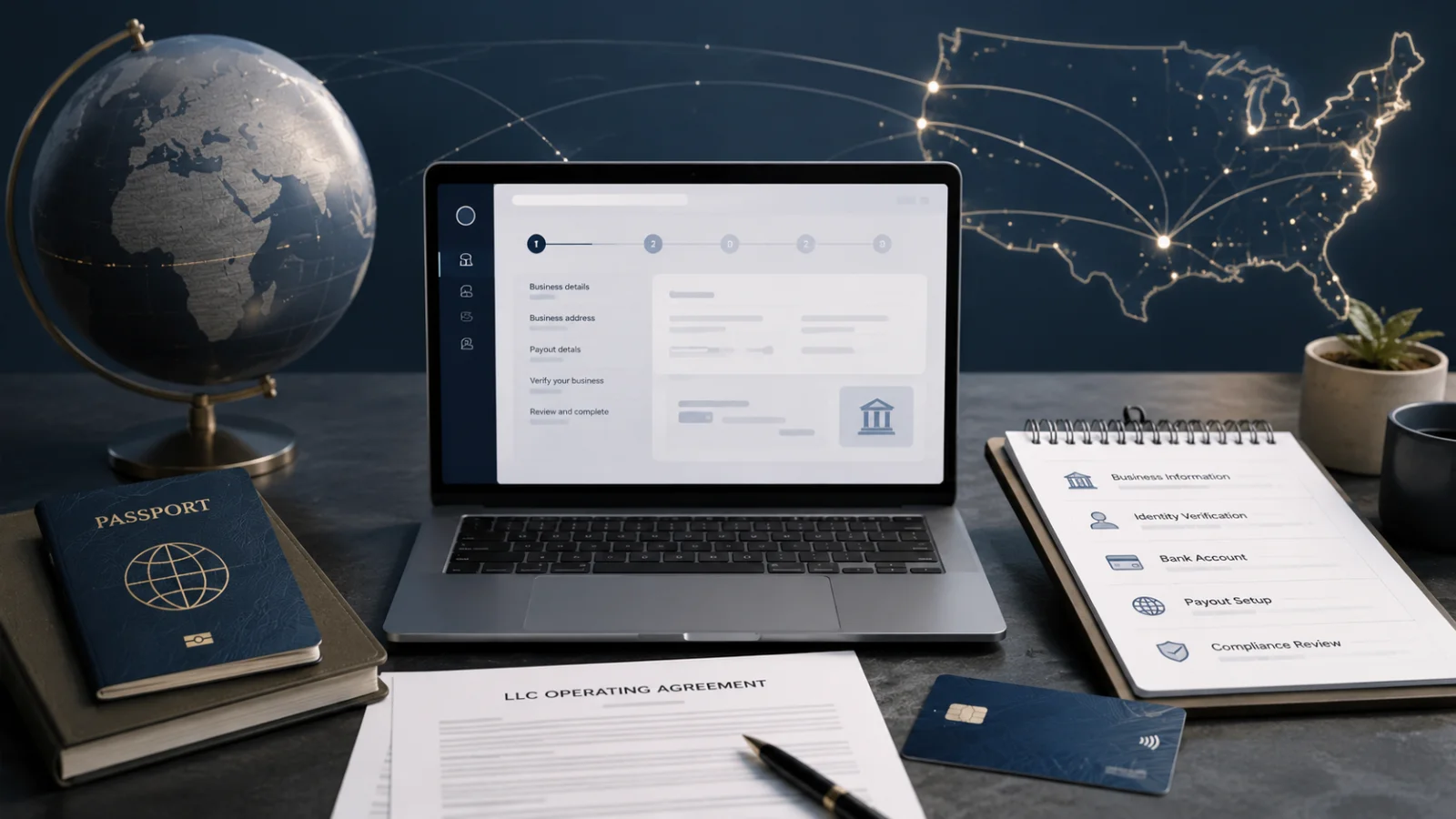
LLCs file a document usually called Articles of Organization; corporations file Articles of Incorporation. Once the state accepts it, the business exists as a distinct legal entity separate from its owner. The filing typically asks for the business name, its purpose, a principal address, the registered agent's name and address, the names of members or directors, and an effective date.
Filing fees vary a lot by state and aren't a fixed cost across the board. Colorado's LLC filing fee is $50, one of the lowest in the country. Massachusetts charges $500 for the same filing, ten times as much. Neither number is universal, and every state's fee should be checked directly on its Secretary of State site before filing, since these figures change.
Where Should an Online-Only Seller Actually Form the LLC?
This is the question most generic business-formation guides skip, and it matters more for ecommerce sellers than most other small businesses. Wyoming, Delaware, and Nevada are popular for low fees, no state income tax, and stronger privacy protections, and plenty of formation services push new founders toward one of them by default.
The catch: if the owner actually lives and operates the business from a different state, forming the LLC somewhere else usually still requires registering as a "foreign" (out-of-state) entity back in the home state, which means paying to register and maintain the LLC in two states instead of one, plus two registered agents. For a solo, home-based dropshipper with no separate reason to be elsewhere, forming in the home state is almost always simpler and cheaper once those duplicate costs are counted. Wyoming or Delaware make more sense once there's a specific reason: raising outside investment (Delaware's corporate law is well-established and familiar to investors), or a genuine multi-state operating footprint that a tax or business attorney has reviewed. Absent one of those, the "best state to form an LLC" answer for most dropshippers is simply the state they already live in.
Step 4: Get a Federal Tax ID (EIN)
An EIN (Employer Identification Number) is a nine-digit federal tax ID the IRS issues to businesses, similar in function to a Social Security Number but for the business itself. It's required to open most business bank accounts, used by most payment processors during account verification, and needed to file business taxes and hire employees.
Getting an EIN directly from the IRS is free. The IRS's own online EIN application takes about 15 minutes and issues the number immediately, but it's only available to applicants who already have a Social Security Number or Individual Taxpayer Identification Number (ITIN) to enter as the "responsible party."
Founders outside the US without an SSN or ITIN can't use the online tool. Instead, the IRS requires Form SS-4 submitted by fax or through its international phone line, with "Foreign" entered on line 7b in place of an SSN or ITIN. Fax submissions are typically processed within about four business days; the international phone line can sometimes assign the EIN during the same call. This route takes longer than the online tool, but it doesn't require a US Social Security Number to complete.
An EIN and an ITIN solve different problems and aren't interchangeable. The EIN identifies the business; an ITIN is a personal US tax identification number that a non-US founder may separately need if they have to file a personal US tax return. Applying for an ITIN through the IRS directly is possible, and services like TheITIN also handle the Form W-7 application process for non-US residents as a paid third-party service (not the IRS itself, and approval isn't guaranteed by any provider). Whichever route is used, it's worth confirming which of the two, EIN or ITIN, actually applies to the situation before paying anyone for either one, since some formation packages bundle in an EIN service the IRS provides for free.
Step 5: Register for Sales Tax and Check Nexus
This is the step most general small-business guides gloss over, and it's specifically relevant to ecommerce because selling into many states at once is the default, not the exception. A state can require an out-of-state seller to collect and remit its sales tax once that seller crosses an "economic nexus" threshold there, even with zero physical presence in the state. This authority traces back to the US Supreme Court's 2018 decision in South Dakota v. Wayfair, which upheld South Dakota's threshold-based nexus law and opened the door for other states to adopt similar rules.
$100,000 in annual sales is the most common threshold used across states, though it isn't universal. Alabama's threshold is $250,000, and California, Texas, and New York each set it at $500,000. A number of states also used to pair the sales threshold with a 200-transaction count trigger; many have dropped the transaction count and now rely on the revenue figure alone. Because these thresholds and rules change from state to state and year to year, the current requirement for any specific state should be checked against that state's own Department of Revenue rather than assumed from a general guide, this article's own numbers included.
Once a threshold is crossed in a state, the seller needs to register there for a sales tax permit before collecting tax from customers in that state. Selling through a marketplace like Amazon or Etsy changes the picture somewhat: marketplace facilitator laws in most states require the marketplace itself to collect and remit sales tax on the seller's behalf for sales made through that marketplace, though the exact scope varies by state and platform and is worth confirming directly with each one. Separately from sales tax, many cities and counties require a general business license or permit for any operating business, including a home-based online one; this is usually a small, low-friction step but is easy to miss entirely since it isn't tied to revenue thresholds.
Step 6: Open a Business Bank Account
Keeping business money in a dedicated account does three things at once: it protects the LLC's liability shield (courts can disregard that shield if personal and business funds are constantly mixed), it makes bookkeeping and tax prep dramatically simpler, and it makes the business look more credible to vendors, processors, and eventually lenders.
For a US-based founder, opening a business account typically requires the EIN, formation documents (Articles of Organization or Incorporation), personal ID, and sometimes a signed LLC or corporate banking resolution.
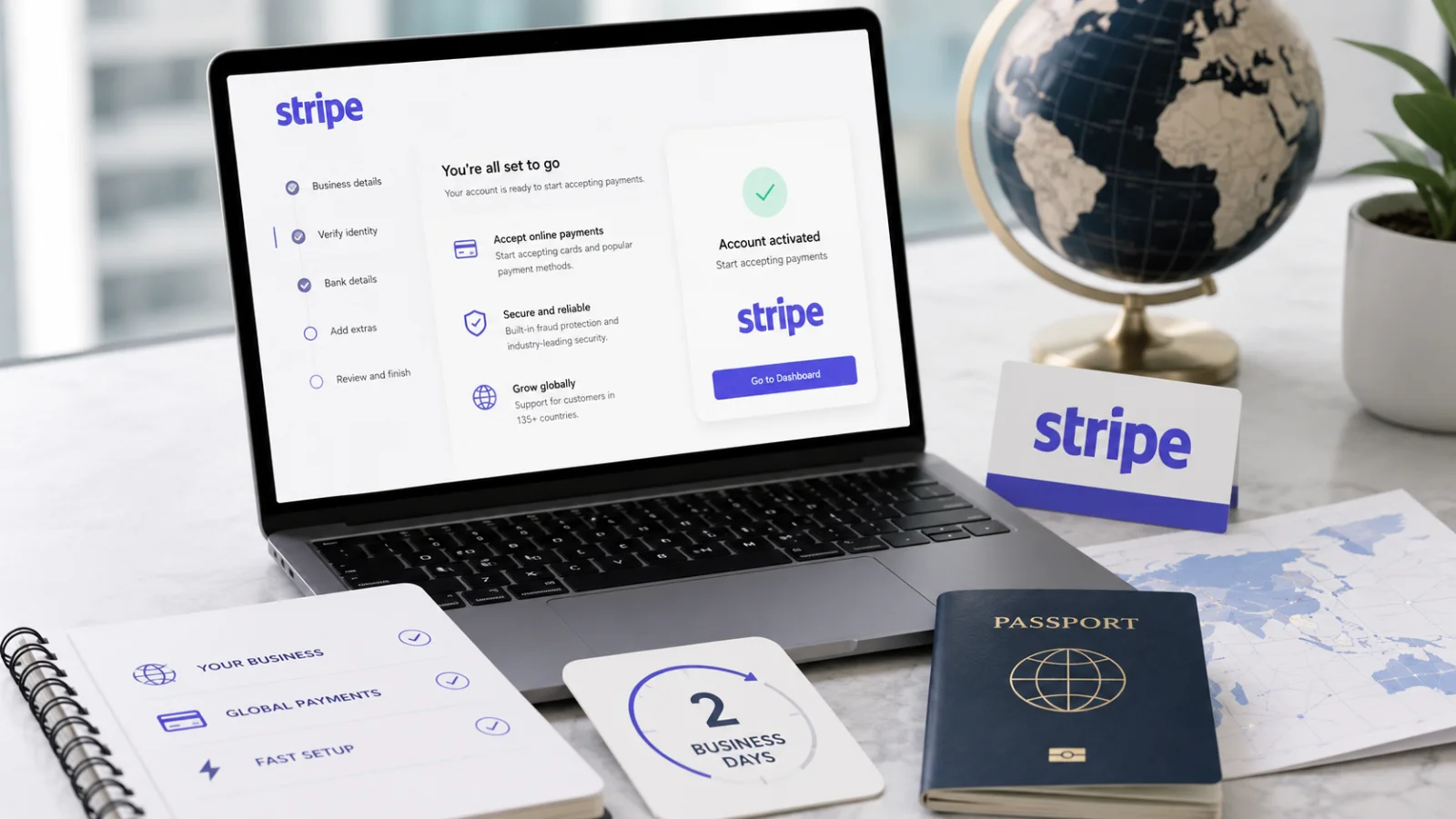
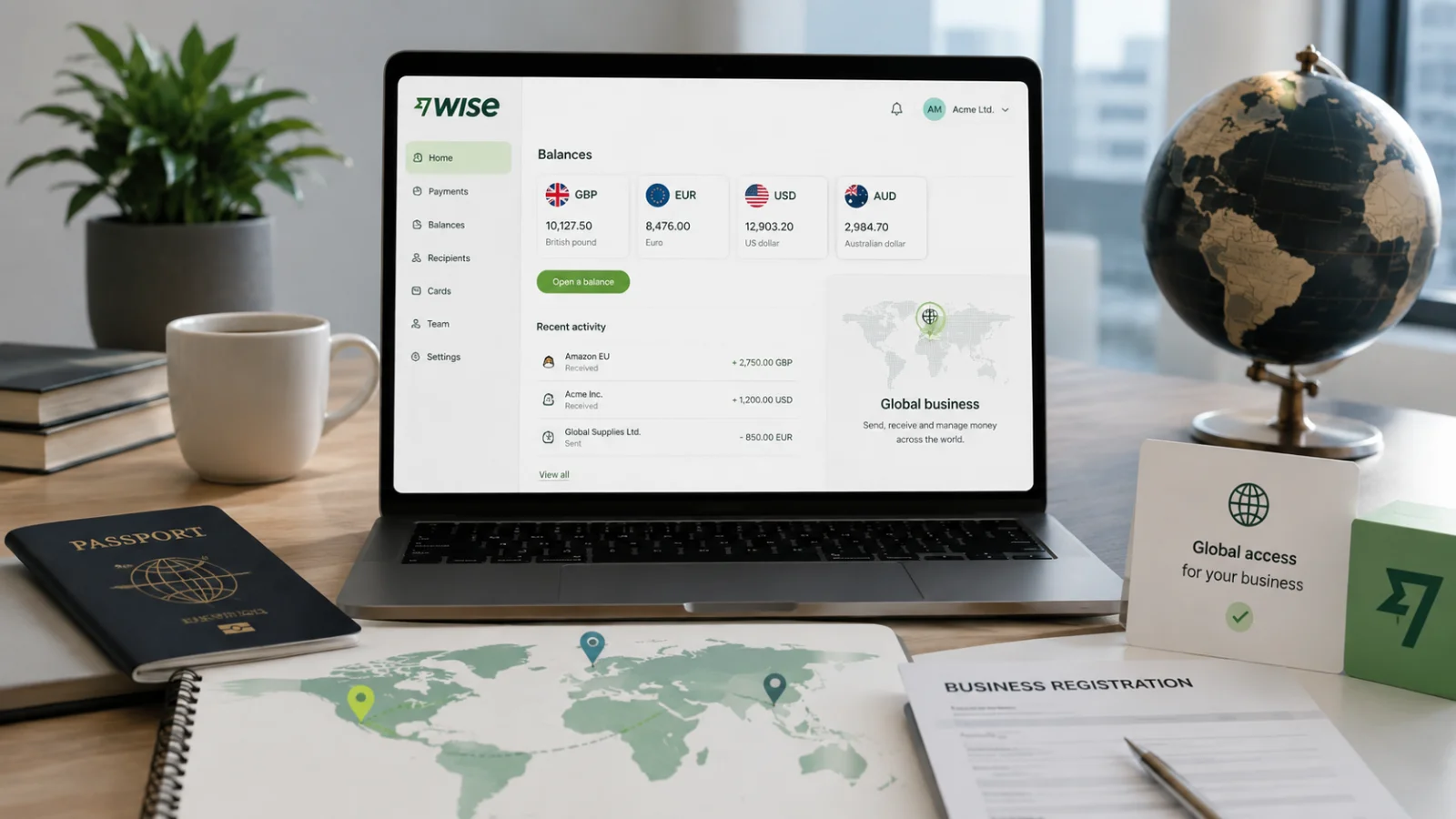
For founders outside the US, traditional banks often require an in-person branch visit or a US Social Security Number, which isn't practical for a remote founder who formed a US LLC specifically to sell online. Two accounts commonly used instead are Airwallex, a business account built for international payments and multi-currency handling, and Wise Business, a multi-currency account that supports receiving and sending international payments without necessarily requiring a US branch visit. Neither should be assumed to carry the same legal status or protections as a chartered bank; check each provider's own current terms for the specific account type before relying on it for anything beyond routine payment collection.
Whichever account is used, the name and details on it should match the LLC's formation documents and EIN exactly. Mismatches between the legal business name on file and the name a payment processor sees are one of the more common, avoidable reasons a new account gets flagged for extra review.
Step 7: Get the Store Online
With the legal and financial groundwork in place, the remaining step is the storefront itself: domain, theme, product pages, and the operational details that turn a registered business into an actual store. Dropmind's Shopify dropshipping step-by-step guide covers that build-out in full, from store setup through supplier vetting and launch. Starting a Shopify store is the most common path for dropshippers specifically because Shopify Payments and its app ecosystem are built to plug directly into the kind of business structure described above.
Common Mistakes When Registering a Dropshipping Business
A few mistakes show up repeatedly with new sellers formalizing a dropshipping business:
- Mixing personal and business funds after forming an LLC, which undermines the liability protection the LLC was formed to create in the first place.
- Forming in a low-fee state like Wyoming or Delaware without accounting for the foreign-qualification cost of also registering in the home state, which often erases the original savings.
- Ignoring sales tax nexus until a state notice arrives, rather than tracking sales by state as revenue grows.
- Using a personal Social Security Number everywhere instead of getting a free EIN, which makes separating business and personal identity harder later.
- Waiting until revenue is large to register anything, which usually just means redoing setup work under time pressure instead of doing it once, early, and correctly.
Frequently Asked Questions
Do I need an LLC to start dropshipping?
No. A dropshipping business can legally start as a sole proprietorship with no state filing at all. An LLC adds a liability shield between personal and business assets, which is why most sellers who plan to run the business seriously, rather than test it briefly, choose to form one.
How much does it cost to register a dropshipping LLC?
State filing fees alone range from around $50 (Colorado) to $500 (Massachusetts), with most states somewhere in between. A registered agent service, if used instead of self-representing, is typically an additional yearly cost on top of the state's filing fee.
Can I get an EIN without a Social Security number?
Yes. Founders without an SSN or ITIN apply using IRS Form SS-4 by fax or through the IRS's international phone line, entering "Foreign" on the responsible-party identification field, instead of using the standard online application.
When do I need to start collecting sales tax as a dropshipper?
Once sales into a specific state cross that state's economic nexus threshold, commonly $100,000 in annual sales though it varies by state, a seller is generally required to register for a sales tax permit and begin collecting tax on sales into that state. Thresholds and rules should be confirmed with each state's Department of Revenue.
Can I use my personal bank account for my dropshipping business?
It's possible early on but not advisable once an LLC is formed. Mixing personal and business funds can undermine the LLC's liability protection and makes bookkeeping and tax preparation more difficult than keeping a separate business account from the start.
Do I need a business license to dropship?
Often yes, separate from any sales tax permit. Many cities and counties require a general business license or permit even for a home-based, online-only business. Requirements vary locally and should be checked with the city or county where the business is based.
This information is provided for general educational purposes and may not apply to every business or jurisdiction. Consider consulting a qualified legal, tax, or financial professional for advice specific to your situation.
Where to Go From Here
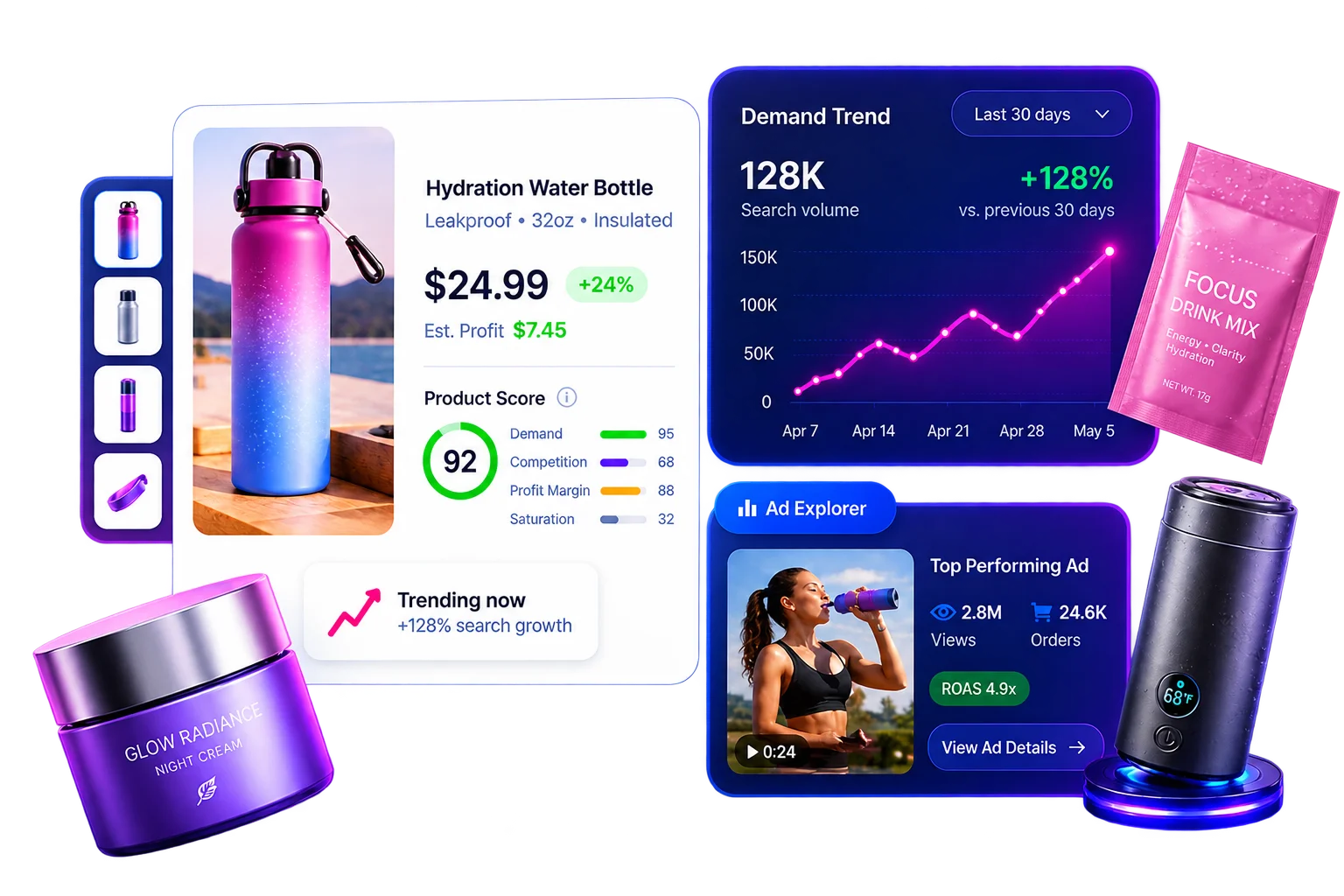
Registration, tax IDs, and banking are groundwork, not the business itself. Once that groundwork is done, the next real decision is what to actually sell. Dropmind's guide to winning dropshipping products framework walks through a research-based approach to that decision: demand signals, ad activity, product lifecycle, and margin, rather than guessing from a trending-products list.