
Table of Contents (23 sections)
How to Register an LLC in 2026: The Complete Formation Checklist
Most guides to registering an LLC assume a single, generic small business: one owner, one state, one address. That's often not how an online business actually operates. A dropshipper or ecommerce seller might live in one state, ship from a supplier's warehouse in another, and sell into all fifty, which changes which steps in the formation process actually matter and which ones are just noise.
This guide walks through the full registration process step by step: choosing a state, naming the business, appointing a registered agent, filing the formation paperwork, writing an operating agreement, getting an EIN, registering for taxes, and staying compliant afterward. It's written for any founder forming an LLC, with specific notes throughout for online sellers, including founders based outside the US.
Short version: most solo founders register a single-member LLC in the state where they actually live, name a registered agent, file Articles of Organization with that state, write a short operating agreement even when the state doesn't require one, get a free EIN directly from the IRS, and open a business bank account once the EIN arrives. State filing fees run from about $35 to $500 depending on the state, and most straightforward single-owner filings don't require a lawyer.
Disclosure: Some links in this article are affiliate links. We may earn a commission if you sign up or purchase through them, at no additional cost to you. This never changes which providers we mention or how we describe them.
Before You Start: What an LLC Actually Does
An LLC (limited liability company) is a business structure registered with a state that creates a legal separation between the owner's personal assets and the business's debts and liabilities. Without one, a founder selling online is operating as a sole proprietor by default, with no separation between personal and business assets. For the deeper mechanics, how liability protection actually works, how an LLC is taxed, and how it compares to staying a sole proprietor, Dropmind's plain-English guide to what an LLC is covers that in full. If the structure decision itself is still open, the sole proprietorship vs. LLC guide walks through when forming one is actually worth it. This article assumes the decision to form an LLC has already been made and focuses only on the registration process itself.
Step 1: Choose Your State
An LLC can be registered in any US state, but the rules, fees, and ongoing obligations vary by state. Most founders register in the state where they actually live and run the business from, since that avoids paying for and maintaining a second state's registration.
Delaware and Wyoming get pitched constantly as the "best" states to form in, mostly for legal predictability and no state income tax. Both arguments are real, but they matter most for businesses raising outside investment (Delaware's well-established corporate law) or businesses with a genuine multi-state footprint, not for a solo, home-based online seller. Form somewhere other than the home state and the business still has to register as a "foreign" LLC back home to legally operate there, which means two states' filing fees, two annual reports, and often two registered agents instead of one. For most online sellers with no fixed physical footprint beyond a home address, that duplicate cost outweighs the appeal of a lower-fee state.
Step 2: Pick and Lock In Your LLC's Name
The name has to be unique in the state of formation, distinguishable from existing registered businesses, and it can't imply the business is a government agency. Most states require it to include "LLC" or "Limited Liability Company" (or an accepted abbreviation) somewhere in the legal name. Name availability is checked through the state's Secretary of State business search, the same database used later to file formation paperwork. If the name is available but the paperwork isn't ready yet, most states allow reserving it for a small fee for a limited window, typically 60 to 120 days.
For an online business, it's worth checking domain and social handle availability at the same time as the state name search. A legal LLC name and a storefront brand name don't have to match exactly, which is where a DBA comes in.
Operating Under a Different Name (DBA)
A DBA ("doing business as," also called a trade name or fictitious name) lets the LLC operate publicly under a name different from its registered legal name, without forming a second entity. A founder might register "West Coast Trading LLC" as the legal name but sell under "Coastline Home Goods" as the storefront brand. This is common for sellers who run more than one storefront brand under a single LLC, since it avoids the cost of forming a separate LLC for each one.
Filing a DBA is separate from LLC formation, usually done with the state or county where the business is based, and typically costs somewhere between $10 and $100 depending on the jurisdiction. A DBA doesn't create a new legal entity or change tax treatment; it's still the same LLC operating under a different public-facing name. Some states require publishing a public notice of the new DBA in a local newspaper, an easy step to miss since it isn't part of the online filing itself.
Step 3: Appoint a Registered Agent
Almost every state requires an LLC to name a registered agent: a person or company with a physical street address (not a PO box) in the state of formation, available during normal business hours to accept legal notices and official state mail on the business's behalf.
A founder can act as their own registered agent if they have a qualifying address in that state and don't mind that address becoming part of the public record. That last part is the reason many home-based and remote sellers hire a registered agent service instead: it keeps a residential address off a public filing. Registered agent services typically run $99 to $300 a year, with most falling in the $100 to $150 range for a straightforward single-state filing; pricing usually depends on how much mail scanning and compliance-deadline tracking is included. Northwest Registered Agent, the company whose own guide partly informed this article's research, is one such Northwest registered agent and formation service; its packages bundle the registered agent role with the filing itself.
A founder based outside the US cannot act as their own registered agent in most states, since the role requires a physical address inside the state of formation. For non-US founders, a paid registered agent service isn't optional, it's the only practical way to satisfy this requirement.
Step 4: File Your Articles of Organization
This is the document that legally creates the LLC. Depending on the state, it's called Articles of Organization, a Certificate of Formation, or a Certificate of Organization, and it's usually filed online directly through the state's Secretary of State (or equivalent) portal. The filing typically asks for the LLC's name and principal address, the registered agent's name and address, whether the LLC is member-managed or manager-managed, and the names of the people organizing it.
Filing fees are set by the state and vary widely. As of 2026, the range runs from around $35 (Montana) to $500 (Massachusetts), with Kentucky, Arkansas, and several others near the low end and Nevada, Tennessee, and Texas also on the higher side. There's no single "typical" number worth memorizing, since the actual fee for any given state changes over time; it should be checked directly on that state's Secretary of State site before filing. Once the state approves the filing, the LLC exists as a legal entity distinct from its owner, generally within a few business days to about two weeks for a standard online filing, though processing time varies by state and by season.
Step 5: Write an Operating Agreement
An operating agreement is the LLC's internal governing document: who owns what percentage, how profits and losses are split, how decisions get made, and what happens if a member leaves or the business dissolves. Most states don't legally require one, especially for a single-member LLC, but skipping it removes one of the clearest pieces of evidence that the LLC is being run as a genuinely separate entity rather than an extension of the owner's personal finances, evidence that matters if the liability shield is ever challenged in court.
For a single-member LLC, the operating agreement is short: it mainly documents that the owner has full authority and that the business's finances are kept separate from personal ones. For a multi-member LLC, it needs to cover ownership percentages, voting rights, and an exit process in real detail, since disagreements between members are far more likely to end up in a dispute without one written down in advance. Templates are widely available to customize; a paid attorney review is worth it once ownership is split between more than one person or profit is significant enough that a dispute would actually be costly.
Step 6: Apply for an EIN
An EIN (Employer Identification Number) is a nine-digit federal tax ID, functionally the business equivalent of a Social Security number. It's required to open most business bank accounts, used by most payment processors during account verification, needed to file business taxes, and required before hiring any employees.
Applying directly through the IRS's own online EIN application is free and takes about 15 minutes, with the number issued immediately at the end of the session. It's available Monday through Friday during IRS business hours, and it's only available to applicants who already have a Social Security Number, an existing EIN, or an Individual Taxpayer Identification Number (ITIN) to enter as the "responsible party."
Founders outside the US without an SSN or ITIN can't use the online tool. The alternative is Form SS-4, submitted by fax (about four business days) or through the IRS's international phone line, with "Foreign" entered on the responsible-party line instead of an SSN or ITIN. It takes longer than the online tool but doesn't require a US Social Security Number to complete. Separately, a non-US founder may also need an ITIN, a personal US tax ID required if they have to file a personal US tax return, which is a different number solving a different problem than the EIN. Applying for one directly through the IRS is possible; services like TheITIN also handle the Form W-7 ITIN application as a paid third-party service (not the IRS itself, and approval isn't guaranteed by any provider). Since the EIN itself is always free from the IRS, it's worth confirming which of the two actually applies before paying anyone for either.
Step 7: Register for State and Local Taxes
Depending on the state and what the business sells, additional tax registrations may apply on top of the federal EIN: a sales tax permit for product-based businesses, employer withholding tax if the business hires anyone, franchise or excise taxes in some states, and state unemployment insurance once there are employees.
For an online seller specifically, the sales tax question is more complicated than it is for a single-location local business, because selling into many states at once is normal, not the exception. A state can require an out-of-state seller to collect and remit its sales tax once that seller crosses that state's "economic nexus" threshold, a rule that traces back to the US Supreme Court's 2018 decision in South Dakota v. Wayfair. Dropmind's registration and tax checklist for dropshipping businesses covers current state-by-state nexus thresholds and marketplace facilitator rules (which shift the collection duty to platforms like Amazon or Etsy in most states) in full; the short version is that the specific threshold and requirement should always be checked against the state's own Department of Revenue, since these figures change over time and vary by state.
Separately from sales tax, many cities and counties require a general business license or permit for any operating business, home-based online sellers included. It's usually a small, low-friction step, but it's easy to miss entirely since it isn't tied to a revenue threshold the way sales tax nexus is.
Step 8: Get Any Required Business Licenses and Permits
Beyond the general local business license covered above, certain products and industries require additional licenses regardless of business structure: health permits for food products, specific certifications for cosmetics and supplements, or professional licenses for regulated services. Most online sellers of general consumer goods won't hit an industry-specific license requirement, but it's worth a direct check against the state's small business licensing portal for anything in a regulated product category before listing it for sale.
What to Do Right After Formation Is Approved
Once the state approves the Articles of Organization and the EIN has arrived, the next practical step is opening a dedicated business bank account. Keeping business funds separate protects the liability shield the LLC was formed to create in the first place (courts can disregard it if personal and business money are constantly mixed), and it makes bookkeeping and tax prep dramatically simpler.
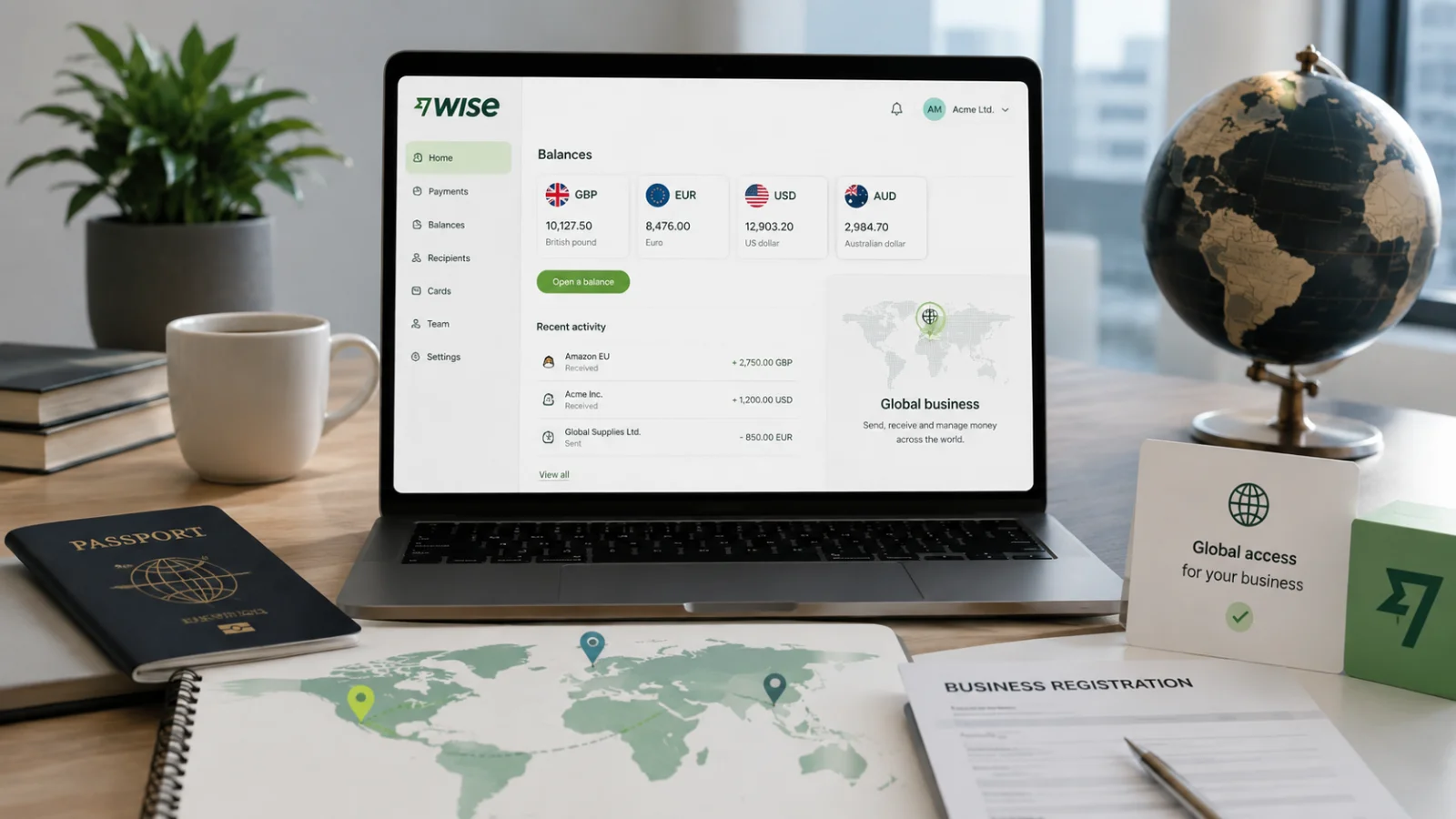
For a US-based founder, opening a business account typically requires the EIN, the Articles of Organization, personal ID, and sometimes a signed LLC banking resolution. For founders outside the US, a traditional bank branch visit or a US Social Security Number is often required, which isn't practical for a remote founder who formed a US LLC specifically to sell online. Airwallex and Wise Business are two accounts commonly used instead, both built for multi-currency, international use without necessarily requiring a US branch visit. Neither carries the same legal status as a chartered bank, so it's worth checking each provider's current terms for the account type actually needed before relying on it for anything beyond routine payment collection. Whichever account gets used, the name on it should match the LLC's formation documents and EIN exactly; a mismatch is one of the more common, avoidable reasons a new account gets flagged for extra review.
Step 9: Stay Compliant After Registration
Forming the LLC isn't a one-time task. Most states require an annual or biennial report to keep the LLC in good standing, often paired with a renewal fee or franchise tax; a handful of states, including Arizona, Missouri, and New Mexico, don't require one at all. Two concrete examples worth knowing before choosing where to form: California charges LLCs a flat $800 minimum annual franchise tax regardless of income, and Delaware charges a flat $300 annual LLC tax, both due whether or not the business made a profit that year. Missing an annual report or renewal fee is one of the more common ways a small LLC accidentally falls out of good standing, sometimes without the owner noticing until a bank or payment processor flags it.
Beyond the annual filing itself, the registered agent has to be maintained continuously, and the state needs to be notified if the business address, ownership, or management structure changes. Setting a yearly compliance reminder, or using a registered agent service that tracks these deadlines, is the simplest way to avoid missing one.
Expanding to Other States (Foreign LLC Qualification)
An LLC formed in one state is a "domestic" LLC there and a "foreign" LLC everywhere else. If the business later opens a physical office, hires an employee, or takes on significant operations in another state, it generally needs to register there too, through a "foreign qualification" filing, a separate fee, and (again) a registered agent in that state. This is a common situation for growing ecommerce businesses that add warehouse space, a fulfillment partner with a physical presence, or remote employees in a new state. Selling into a state and shipping products there, without a physical presence or employees, doesn't by itself trigger foreign qualification the way it can trigger sales tax nexus; the two are separate legal questions governed by different rules, and conflating them is a common mistake worth avoiding.
Types of LLCs Worth Knowing
Most LLCs formed by online sellers are simple, either single-member (one owner) or multi-member (more than one owner), and either member-managed (owners run daily operations directly) or manager-managed (owners appoint someone else to run it). Two less common variants come up occasionally: a PLLC (Professional LLC), required in some states for licensed professionals like doctors or accountants and not typically relevant to product-based ecommerce; and a Series LLC, available in a subset of states, which allows multiple separate "cells" under one parent LLC, sometimes used by sellers running several distinct storefront brands who want liability separation between them without forming and maintaining a fully separate LLC for each. Series LLC availability and treatment vary significantly by state, and it's a structure worth reviewing with an attorney rather than setting up from a general guide, this one included.
Common Mistakes When Registering an LLC
- Forming in Wyoming, Delaware, or Nevada by default without accounting for the foreign-qualification cost of also registering back in the home state, which often erases the original savings.
- Skipping the operating agreement for a single-member LLC, then having no clear paper trail if the liability shield is ever challenged.
- Mixing personal and business funds after opening the business bank account, which undermines the exact protection the LLC was formed to create.
- Missing an annual report or renewal fee and only finding out once the LLC has fallen out of good standing.
- Paying a third party for an EIN, something the IRS provides for free directly, without checking first.
- Assuming shipping into a state is the same thing as needing to register a foreign LLC there, when in most cases it's a sales tax nexus question instead.
Frequently Asked Questions
How much does it cost to register an LLC?
State filing fees alone range from around $35 to $500 depending on the state, with most states somewhere in between. A registered agent service, if used instead of self-representing, typically adds $99 to $300 a year on top of the state's fee, and some states also charge a recurring annual report fee or franchise tax.
How long does it take to register an LLC?
Most states process a standard online filing within a few business days to about two weeks, though processing times shift with each state's filing volume and can run slower during peak seasons. Some states offer paid expedited processing for a faster turnaround.
Do I need a registered agent?
Yes, almost every state requires one. A founder with a qualifying in-state address can act as their own registered agent; otherwise a paid registered agent service handles it, which is typically the only practical option for a founder based outside the US.
Can I register my LLC using my home address?
In most states, yes, but that address becomes part of the public record once filed, which is the main reason some founders choose a registered agent service instead.
Do I need a lawyer to register an LLC?
Not usually, for a straightforward single-member LLC filed in the founder's home state. A paid legal review becomes worth it once ownership is split between multiple members, the business operates in more than one state, or the industry has specific regulatory requirements.
Where should I register my LLC?
Usually the state where the founder actually lives and operates the business from. Delaware and Wyoming get recommended often, but mainly benefit businesses raising outside investment or with a genuine multi-state footprint, not a solo home-based online seller.
This information is provided for general educational purposes and may not apply to every business or jurisdiction. Consider consulting a qualified legal, tax, or financial professional for advice specific to your situation.
Where to Go From Here
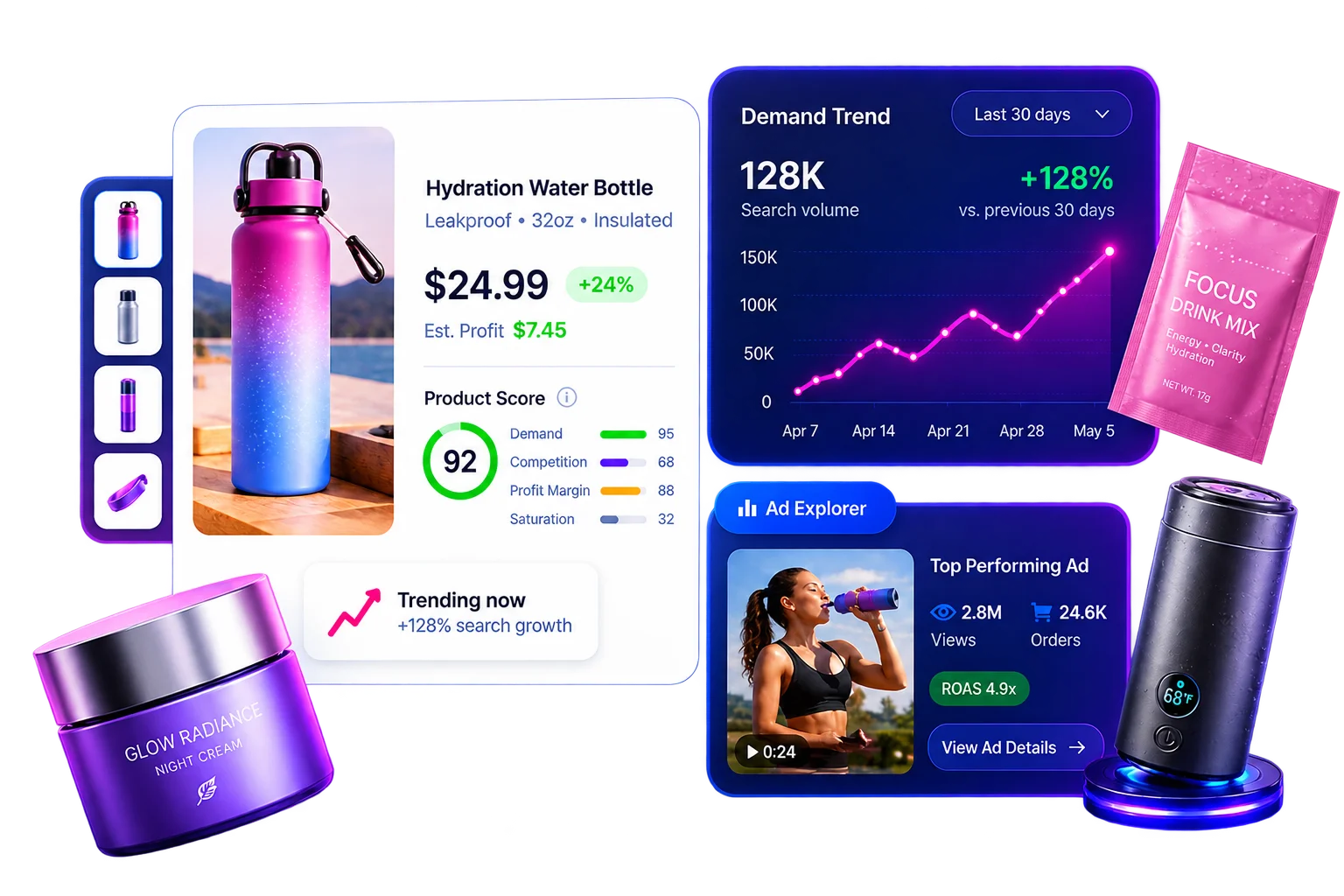
Registration is groundwork, not the business itself. Once the LLC itself is formed, the Shopify dropshipping step-by-step guide covers building the actual storefront. Once the legal and financial groundwork is done, the next real decision is what to sell; Dropmind's winning dropshipping products framework walks through a research-based approach to that instead of guessing from a trending-products list.