Table of Contents (6 sections)
Most people who launch a dropshipping store spend weeks picking a niche, a theme, and a product catalog — then treat their legal structure as an afterthought. That's backwards. The entity you choose determines how much risk you're personally carrying, how suppliers and payment processors perceive you, and how much of your profit the tax code lets you keep. It's not glamorous, but it's foundational.
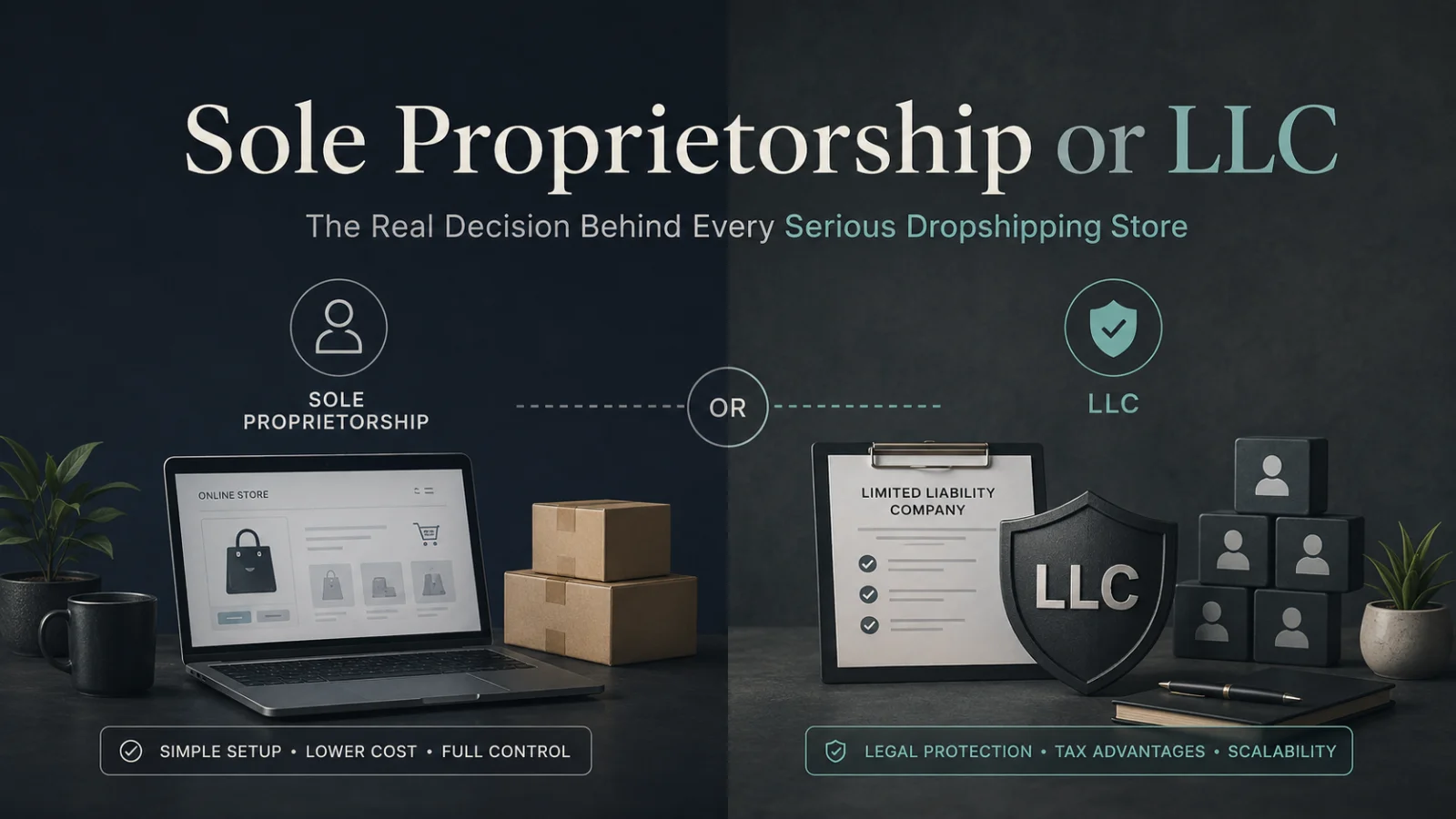
Here's the short version: a sole proprietorship is the default setup you fall into the moment you start selling — no paperwork, no cost, no separation between you and the business. An LLC (Limited Liability Company) creates a legal wall between your personal finances and your store, at the cost of a bit more setup work and ongoing admin. Which one fits depends entirely on where your store currently stands, not on generic advice you saw in a forum.
Sole Proprietorship: The Default You Didn't Choose
If you've started selling online without registering anything, congratulations — you're already a sole proprietor. No forms, no fees, no waiting period. Your business income flows straight onto your personal tax return, which keeps bookkeeping refreshingly simple in the early days.
The tradeoff is exposure. There's no legal boundary between you and your store, so if a customer alleges your product caused harm, or a supplier dispute escalates into a lawsuit, your personal savings, vehicle, and other assets are fair game. You'll also carry the full self-employment tax burden yourself, since there's no employer splitting that cost with you anymore.
This structure makes sense while you're validating an idea — running a low-volume test, figuring out whether dropshipping is even something you want to stick with, or generating little to no consistent revenue. Think of it as the trial version of running a business: cheap to access, but offering essentially no safety net if something breaks.
LLC: Where Your Business Becomes Its Own Legal Person
An LLC does one thing that a sole proprietorship structurally cannot: it turns your store into a distinct legal entity, separate from you as an individual. That separation is the entire point of "limited liability" — if the business gets sued or defaults on an obligation, your personal assets generally stay out of reach.
That protection isn't unconditional, though. Commingling personal and business funds, or engaging in outright fraud, can trigger what's known as "piercing the corporate veil," which strips away that liability shield. Run the LLC properly — separate bank account, clean records — and the protection holds.
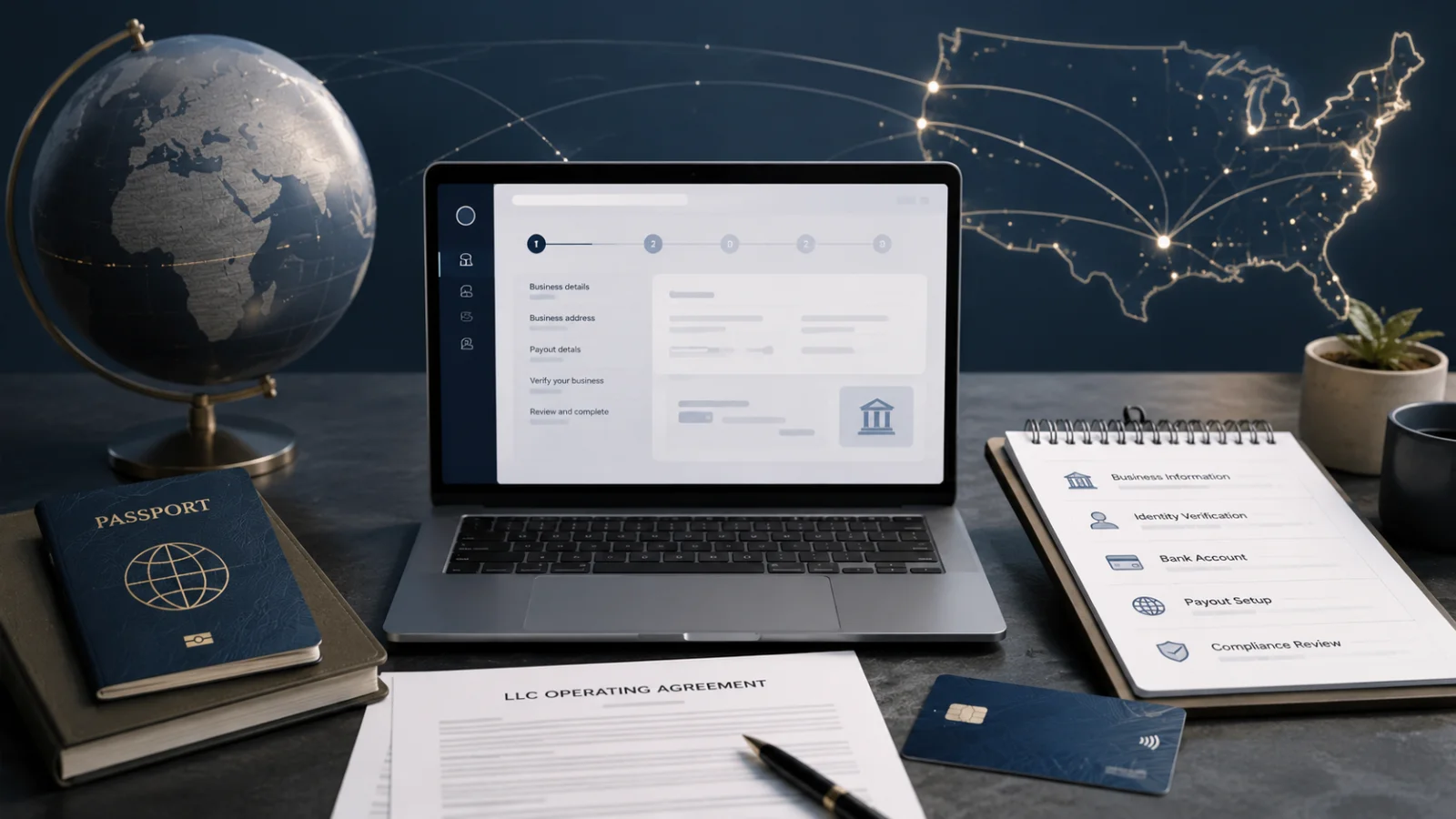
Beyond liability, an LLC buys you credibility. Banks, payment processors, and suppliers all read an LLC as a signal that you're operating a real business rather than a side project, which tends to smooth out approvals and negotiations. Tax-wise, an LLC defaults to being taxed identically to a sole proprietorship, but it opens the door to electing S-Corporation tax treatment later, which can meaningfully reduce self-employment tax once your profits climb.
The cost of that upgrade is modest but real: state filing fees (commonly in the $50–$500 range), and ongoing obligations like annual reports or renewal filings, depending on your jurisdiction. None of it is complicated, but it does require a bit more organizational discipline than simply "just selling."
Sole Proprietorship vs. LLC at a Glance
| Factor | Sole Proprietorship | LLC |
|---|---|---|
| Time to set up | Immediate | Requires state filing |
| Startup cost | $0–$50 | $50–$500+ |
| Liability protection | None | Yes |
| Tax filing | Personal return only | Flexible (default or S-Corp election) |
| Banking & payment approval | Harder | Easier |
| Perceived professionalism | Lower | Higher |
| Ongoing paperwork | Minimal | Moderate |
| Room to scale | Limited | Strong |
Why This Choice Matters More in Dropshipping Specifically
Dropshipping has a few operational quirks that make the entity decision higher-stakes than it might be for, say, a local freelance business.
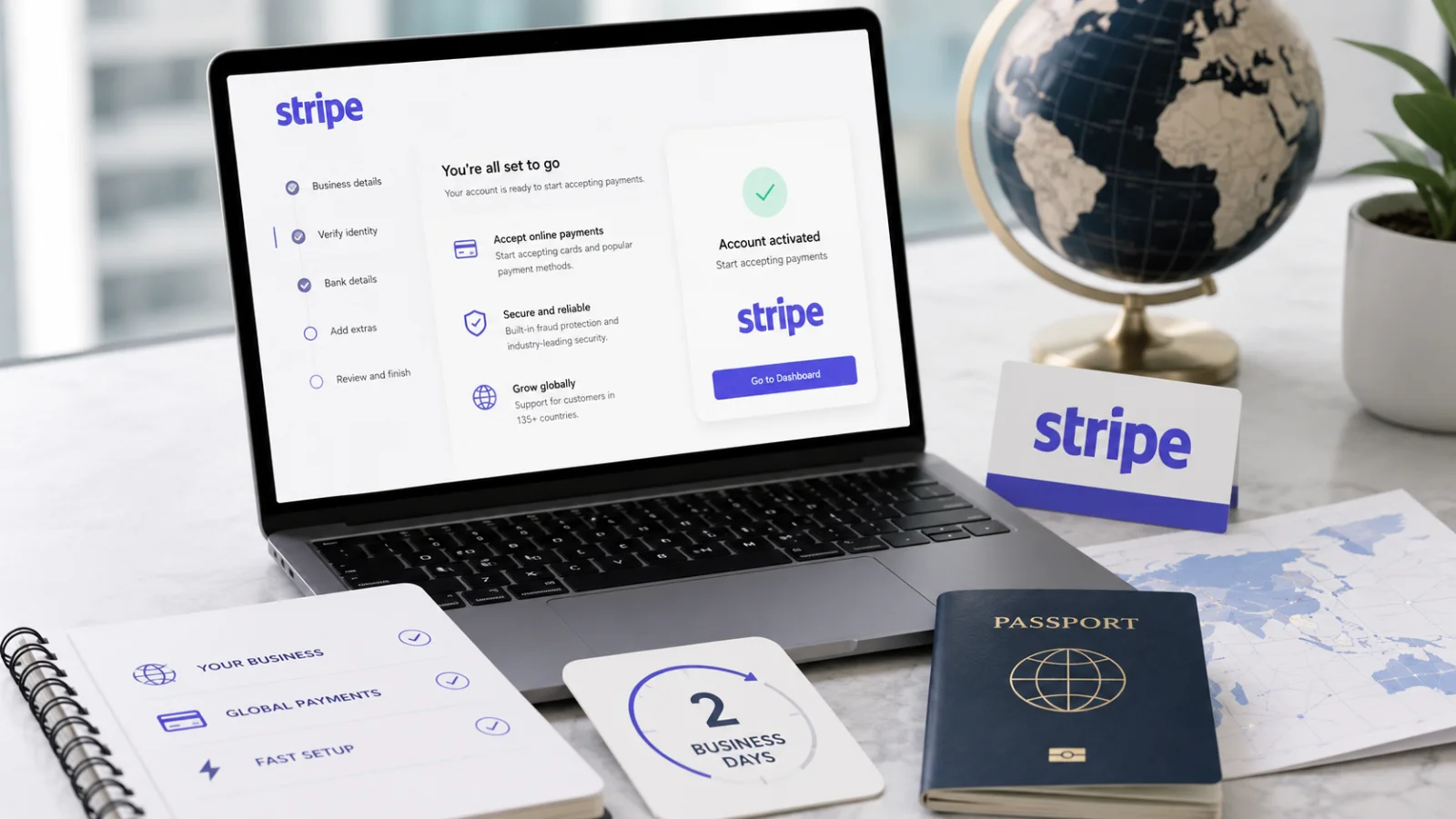
- Payment processors are unforgiving. Stripe, PayPal, and Shopify Payments actively monitor account risk, and frozen funds can sit locked up for months if you get flagged. Sole proprietors tend to draw more scrutiny simply because they're unverified individuals; an LLC with its own EIN, business name, and dedicated bank account reads as lower-risk. Past certain revenue thresholds, some processors effectively require a formal business entity anyway.
- Suppliers negotiate differently with businesses than with individuals. Whether you're sourcing through an agent or a platform like Zendrop, an email signed off from an LLC tends to get better shipping terms, more openness to private labeling, and greater willingness to share inventory data — because you look like a durable business relationship rather than a one-off buyer.
- Disputes and chargebacks are part of the job. Dropshipping inherently involves quality issues, shipping delays, and unhappy customers. As a sole proprietor, you personally absorb the fallout of serious complaints or claims. Under an LLC, that exposure is contained to the business itself, and it's also easier to formalize refund policies or bring on support staff without it feeling like one person firefighting alone.
- Tax efficiency compounds as you grow. Both structures let you deduct legitimate expenses like ad spend and software subscriptions. But once profits move well past the $50,000 mark, the ability to elect S-Corp taxation under an LLC can save real money by reducing the self-employment tax hit — an option a sole proprietorship simply doesn't have.
- Trust and brand equity accumulate faster under a real entity. Trademark registration, business credit, investor conversations — these all assume you're operating as a company, not an individual. It's not a coincidence that most dropshipping stores that reach six or seven figures are structured as LLCs or corporations rather than run under someone's personal name.
Myths Worth Retiring
A few pieces of recycled advice keep circulating that deserve pushback.
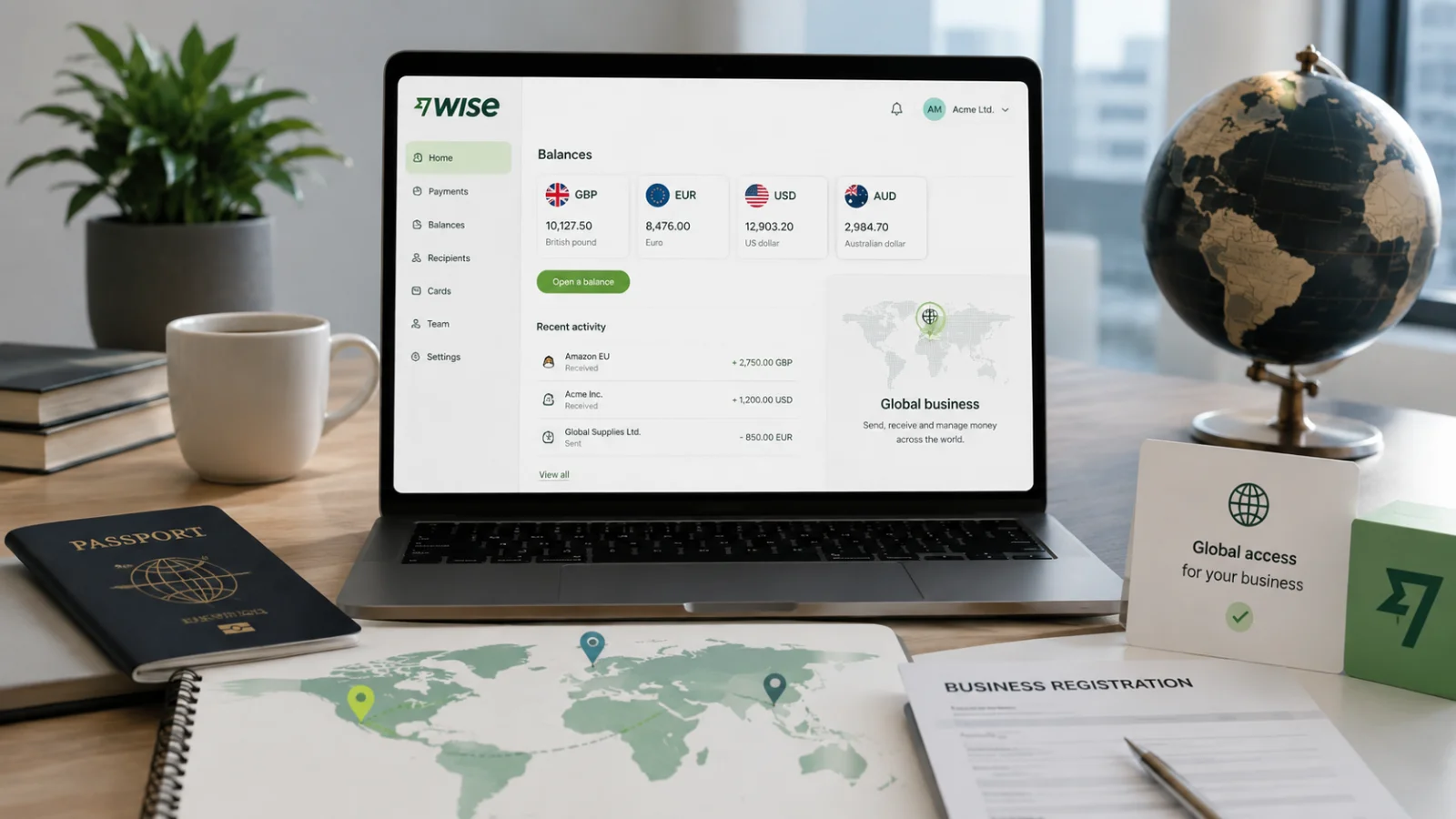
"I don't need an LLC until I'm making real money" underestimates how early the risk actually shows up — a $1,000/month store can still get hit with a processor freeze or a supplier dispute. "LLCs are expensive and complicated" ignores that many states charge under $200, with no lawyer required. "Forming an LLC means paying more tax" misreads the default tax treatment, which mirrors a sole proprietorship until you actively elect otherwise. And "I can't form a US LLC if I don't live in the US" overlooks the well-established practice of non-resident dropshippers registering in states like Wyoming or Delaware specifically to access Stripe, PayPal, and US suppliers.
The Practical Verdict
Neither structure is objectively "better" — the right one tracks your stage, not your ambition. Stay a sole proprietor while you're genuinely testing an idea, generating little revenue, or not yet ready to commit resources to formal business operations; it's fast, cheap, and adequate for that phase. Move to an LLC once sales become consistent, you're building something you intend to protect long-term, or you're actively scaling — the liability shield, banking access, and tax flexibility earn back their cost quickly at that point.
And importantly, this isn't a permanent fork in the road. Plenty of successful stores start as sole proprietorships to keep initial friction low, then convert to an LLC the moment the business starts behaving like a real one.