
Table of Contents (21 sections)
YouTube Marketing for Dropshipping in 2026: A Traffic-First Playbook
Most YouTube marketing guides published in 2026 are written for people who want the channel itself to become the business: ad revenue, brand deals, and affiliate income as the end goal. That is a different project than what a dropshipping store owner is actually trying to do. A store already has a product and a way to sell it, so the channel's job is not to clear the YouTube Partner Program threshold. It is to become the place where someone typing a buying-intent search finds a genuinely useful video and ends up on a product page ready to buy.
That distinction changes almost every decision that follows, from which videos to prioritize to how seriously to treat ad revenue as a goal at all. This guide covers what YouTube marketing looks like when the store, not the channel, is the business.
Quick answer
YouTube marketing works for a dropshipping store when the channel exists to send warm, purchase-ready traffic to the store rather than to chase Partner Program ad revenue as a primary income source. Product reviews, demos, and how-to videos convert best because the viewer already has commercial intent. Shorts handle cold-audience discovery the way Reels do on Instagram, product tags and the YouTube Shopping affiliate program (open to eligible US creators at 15,000 subscribers in 2026) add a secondary revenue path, and ad income itself stays modest for most channels well past the first year. Build content around a validated product, link the store in every description from video one, and treat Partner Program income as a bonus, not the plan.
Why "grow a channel and monetize it" advice misses the point for a dropshipping store
The economics explain why. Average YouTube CPM (what an advertiser pays per 1,000 ad impressions) spans roughly $4 to $15 across niches in 2026, with a spread of 20x or more between the highest and lowest categories: finance, B2B, and insurance content can command $15 to $50-plus, while entertainment and gaming content often sits under $5. What a creator actually keeps, the RPM, runs lower still, since YouTube retains close to 45% of ad revenue before it reaches the channel. A general ecommerce or product-review video in the middle of that range might generate somewhere in the low tens of dollars per 1,000 views once the math settles, and that is before accounting for views that never see an ad at all.
Compare that to what a single sale is worth on a $40 to $80 dropshipping product. A video with a few thousand views and a handful of conversions can outearn its own ad revenue many times over through store margin alone, and it does so immediately rather than after clearing a subscriber and watch-hour threshold. This is the real argument for treating a YouTube channel as a traffic and trust engine first: the video's job is to rank for a query someone types right before they buy something, not to accumulate watch hours for their own sake.
The YouTube formats that matter for a dropshipping store
YouTube is not one format. Each surface plays a different role in a dropshipping funnel, and treating them the same way wastes production effort.
Long-form reviews, demos, and how-to videos: the highest-intent traffic
Someone searching "[product] review" or "how to use [product]" is usually close to a purchase decision, not casually browsing. A clear, honest review or demonstration video that shows the product in real use, states its actual limitations, and links to a store in the description tends to keep earning traffic for months after it ranks, since YouTube functions as a search engine as much as a social feed. This format rewards specificity: a video reviewing one product or one narrow category consistently outperforms a broad "best products for X" roundup for commercial intent, because the viewer already knows roughly what they want.
Shorts: cold-audience discovery
Shorts get distributed to non-subscribers largely on watch-through and rewatch behavior, similar to how Instagram Reels get pushed beyond a store's existing followers. For a dropshipping channel, Shorts work best as quick problem-solution hooks, a five-second before-and-after, or a genuine reaction clip, with a pinned comment or end screen pointing viewers to the full review for anyone who wants more detail. A polished, ad-style Short tends to underperform a rougher, native-feeling one, because it reads as an ad rather than as content worth watching to the end.
YouTube Shopping and product tags: an in-video purchase path
Creators can tag up to 60 products per video, Short, or livestream, giving viewers a shopping button or product sticker without leaving the video. Eligible US creators with an active Partner Program channel and at least 15,000 subscribers can also join the YouTube Shopping affiliate program, tagging participating brands' products and earning a commission when a viewer buys through the retailer's checkout. This is a genuinely useful secondary tool once a channel qualifies, but it is not a substitute for linking a store directly: tagging someone else's product pays a commission, while sending traffic to a store's own listing keeps the full margin.
Community posts and comments: the trust layer between uploads
The Community tab and the comment section do for YouTube what Stories and DMs do for Instagram: they keep a warm audience engaged and answer the specific questions that a video description cannot anticipate. A genuine reply to "does this work for X" or "how long does shipping take" often closes a sale that a static product page could not, because it removes doubt from a stranger who has never bought from the store before.
Building content around validated products, not video ideas
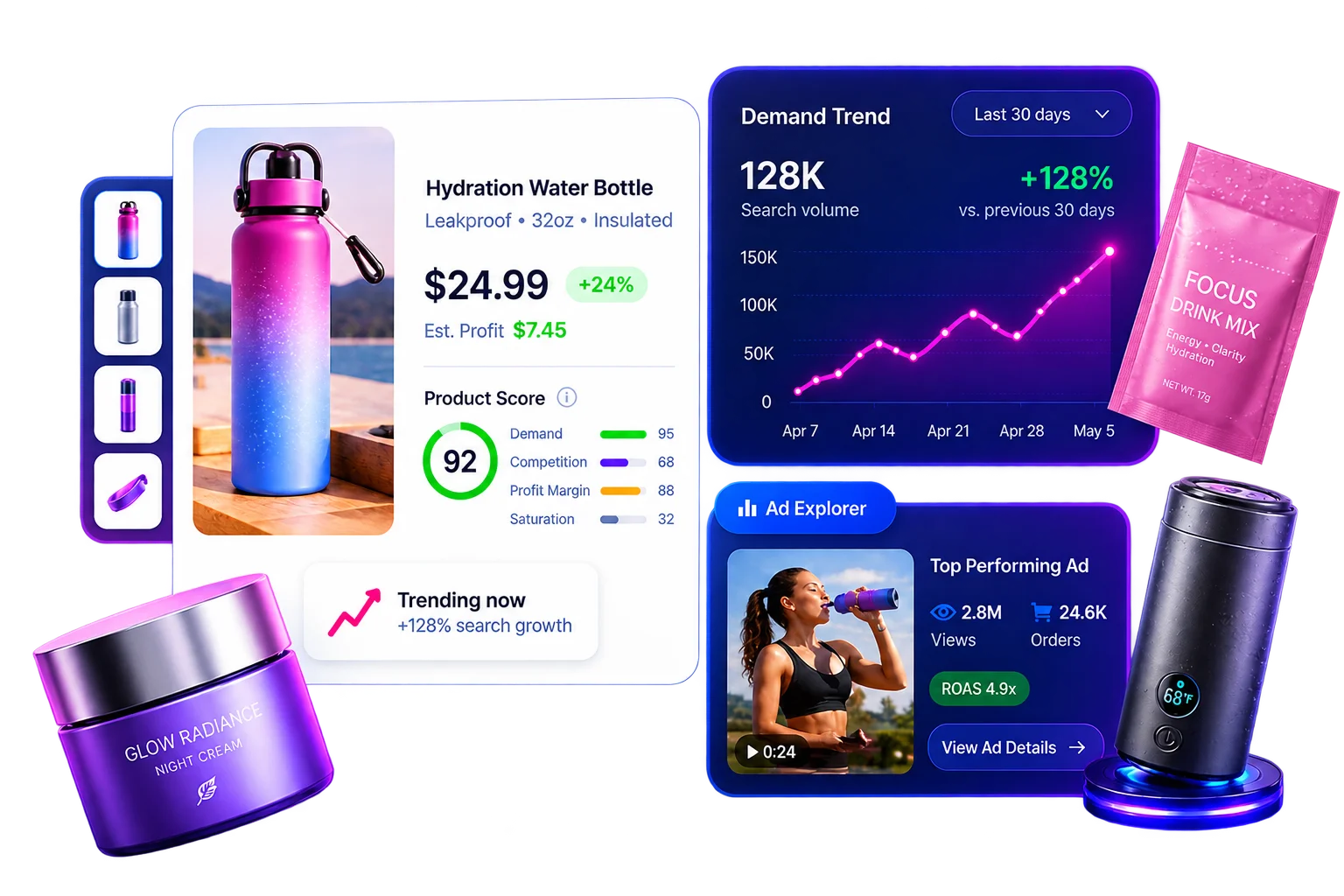
Generic advice says to pick a niche and start filming consistently. For a dropshipping channel, that puts the content before the evidence. A product that already shows independent demand, meaning real search interest, sustained competitor advertising, or category momentum that exists apart from a store's own marketing, gives a video a natural hook. An unvalidated product requires manufacturing interest from nothing, and no amount of editing fixes that gap.
A more useful sequence starts with the product, not the video idea: confirm demand on the two or three strongest candidates before scripting anything, then batch reviews and demos around those specific products rather than around a generic theme. Reviewing product-level demand signals before committing to a video is the same discipline covered in more depth in Dropmind's guide to finding winning dropshipping products, and it applies directly here: a review built around a product with real demand behind it has a real advantage over a review built around a guess. Checking Dropmind's Winning Products shortlist before committing camera time is a faster way to confirm that signal than waiting to see how a video performs after publishing.
What YouTube ad revenue and the Partner Program actually mean for a dropshipping channel
YouTube's monetization path runs on two tiers as of 2026. The entry tier unlocks at 500 subscribers, three public uploads in the past 90 days, and either 3,000 watch hours in the past 12 months or 3 million Shorts views in the past 90 days. It grants access to fan-funding tools only: Super Chat, Super Thanks, channel memberships, and the merchandise shelf, not ad revenue. Full Partner Program access, including ads, requires 1,000 subscribers and either 4,000 public watch hours in the past 12 months or 10 million Shorts views in the past 90 days, plus two-step verification and a clean strikes record.
Most channels in non-viral niches take 6 to 12 months of consistent uploads to reach the full tier, and ad income at that stage is typically modest, often in the tens to low hundreds of dollars a month, before it becomes meaningful. That is not a reason to avoid the Partner Program. It is a reason not to build a store's growth plan around it. Treat ad revenue as a slow-building bonus on top of a channel whose real return comes from store traffic and margin, not as the primary metric of whether the channel is working.
The YouTube Shopping affiliate program versus linking your own store
Once a channel clears the 15,000-subscriber threshold in the US, the affiliate program becomes a reasonable way to add income from products a store does not sell, reviewing complementary items in a niche and earning a commission through the retailer's own checkout. For a dropshipping store's own products, though, a direct link to the store almost always beats an affiliate tag, since a store keeps its full margin instead of paying a commission out of it. The practical approach most channels land on is straightforward: link the store directly for products the channel sells, and reserve product tagging for adjacent items worth mentioning that are not part of the store's own catalog.
Growth tactics that actually move a dropshipping channel in 2026
- Titles built around what people search, not what sounds clever. A specific, buying-intent phrase like "[product] review after 3 months" consistently outperforms a vague or punny title, because it matches what a near-purchase viewer is actually typing.
- Thumbnails that show the product clearly. A thumbnail with a face reaction and no visible product can win the click, but it tends to attract viewers with lower purchase intent than one that shows exactly what the video is about.
- Consistency over volume. One well-optimized video a week, sustained for months, generally outperforms a burst of daily uploads followed by a long gap, since the algorithm rewards a channel it can predict.
- A Shorts-to-long-form funnel. Use a Short to surface a hook or a quick before-and-after, then point interested viewers to the full review through a pinned comment or end screen rather than trying to sell the product inside the Short itself.
- Repurposing footage across formats. A single filming session for a long-form review can also produce two or three Shorts, an Instagram Reel, and a couple of product-page clips, multiplying the return on the time spent filming. Stores already running Dropmind's Instagram marketing playbook can usually repurpose the same footage into both channels rather than treating them as separate content operations.
Common mistakes dropshipping stores make on YouTube
- Building the channel around ad revenue instead of store traffic. Chasing the Partner Program threshold as the main goal optimizes for the wrong number for a store owner.
- Waiting to link the store until the channel "looks established." Every video description should include a store link from the first upload, since even a small, high-intent trickle of traffic adds up faster than waiting for a subscriber milestone that may never matter to sales.
- Ignoring retention data. Average view duration and audience retention graphs in YouTube Studio show exactly where viewers drop off, and that information is far more useful for planning the next video than subscriber count alone.
- Using misleading thumbnails or titles. Content that earns clicks but loses viewers quickly signals low quality to the algorithm, which actively deprioritizes high click-through, low retention videos in 2026.
- Reposting other creators' footage without transformation. This risks a Content ID claim or a copyright strike, either of which can jeopardize monetization eligibility entirely.
A 30/60/90-day plan for a dropshipping channel
Days 1 through 30 are for validation and a first batch of content. Confirm demand on two or three product candidates using search interest and competitor advertising activity, then film and publish one long-form review or demo per week for each, with the store link in the first two lines of every description. Reply to every comment, since early comments are often the clearest signal of what to cover next.
Days 31 through 60 are for adding Shorts and a Community-tab habit. Turn the strongest moments from each long-form video into two or three Shorts, post Community updates between uploads to keep the channel active in the algorithm's eyes, and start tracking which titles and thumbnails are getting the best click-through and retention so the next batch of videos can build on what already works.
Days 61 through 90 are for scaling what is working. Double down on the product and video format with the strongest watch time and store traffic, apply for the Partner Program's fan-funding tier if the channel qualifies, and consider whether a product sits close enough to the channel's niche to be worth tagging through the affiliate program once eligible. By day 90, a channel should be able to point to specific videos driving specific sales, not just a general sense that views are climbing.
Staying compliant on YouTube
This section reflects the FTC's Endorsement Guides and YouTube's own disclosure policies as reviewed on August 10, 2026, and applies to advertising and endorsements reaching consumers in the United States. Other countries have their own advertising-disclosure rules, so sellers marketing outside the US should confirm the applicable requirements in each relevant jurisdiction. This is general educational information, not legal advice.
Any material connection between a channel and a product it promotes, whether a paid partnership, a free product sent for review, or an affiliate commission, requires clear and conspicuous disclosure under the FTC's Endorsement Guides. In practice, that means using YouTube's built-in paid-promotion checkbox at upload, stating the relationship verbally near the start of the video, and repeating it in the description rather than burying it below the fold. A vague hashtag or an assumption that "everyone knows it's an ad" does not meet that standard on its own. The exact current penalty framework is worth confirming directly on ftc.gov rather than assumed from older figures, since it changes periodically.
On the platform side, reused footage without meaningful transformation, misleading claims about what a product does, and engagement manipulation such as purchased views or subscribers remain the fastest ways to lose monetization eligibility or trigger a strike. None of this is exciting guidance, but it is a meaningful part of the difference between a channel still driving traffic in eighteen months and one that loses its monetization status overnight.
Frequently asked questions
How is YouTube marketing for dropshipping different from building a channel to earn ad revenue?
A creator chasing ad revenue optimizes for subscribers and watch hours because that is the product. A dropshipping channel already has a product: the store. Its job is to rank for buying-intent searches and convert warm viewers into store traffic, so metrics like store clicks and product-page conversions matter more than hitting the Partner Program threshold on any particular timeline.
How many subscribers do you need before YouTube marketing is worth it for a dropshipping store?
None. A store link belongs in the description of the very first video, and even a small audience with real buying intent can generate sales long before a channel reaches 500 or 1,000 subscribers. Subscriber count matters for the Partner Program's fan-funding and ad-revenue tiers specifically, not for whether a video can drive store traffic.
Is the YouTube Shopping affiliate program worth it for a dropshipping store?
It depends on what the channel is promoting. For a store's own products, a direct link keeps the full margin and usually beats tagging through the affiliate program, which pays a commission instead. The affiliate program becomes more useful once a channel clears the 15,000-subscriber eligibility threshold and wants to earn from complementary products outside its own catalog.
What is a realistic timeline to see store traffic from YouTube?
Many channels see early click-through on store links within the first few weeks of consistent uploads, since a store link works from video one regardless of subscriber count. More meaningful, repeatable traffic tends to build over 60 to 90 days as videos accumulate search rankings, and results vary widely by niche, competition, and how well the videos match genuine buying-intent searches.
Do Shorts or long-form video work better for a dropshipping store?
They serve different jobs. Shorts are the stronger tool for cold-audience discovery and building initial channel momentum, while long-form reviews and demos tend to convert better because the viewer has already committed several minutes to a topic they care about. Most channels that grow steadily use Shorts to surface interest and long-form video to close it.
Conclusion
YouTube in 2026 still rewards the same fundamentals it always has: genuinely useful content, consistent uploads, and videos that keep the promise their title and thumbnail make. For a dropshipping store, the leverage point sits upstream of all of that. A channel built around validated products and buying-intent searches will outperform a channel built around chasing the Partner Program threshold, because it is solving the problem the store actually has: getting warm, purchase-ready traffic to a product page. Ad revenue and the Shopping affiliate program are worth pursuing once a channel qualifies. They are not the reason to start filming.
This article is provided for general educational purposes. Platform features, monetization thresholds, and advertising rates referenced here can change, and results vary by niche, budget, and execution. Confirm current details directly on YouTube's official Creator support pages before making a monetization or compliance decision.